

Moodan
GTM
3 Apr
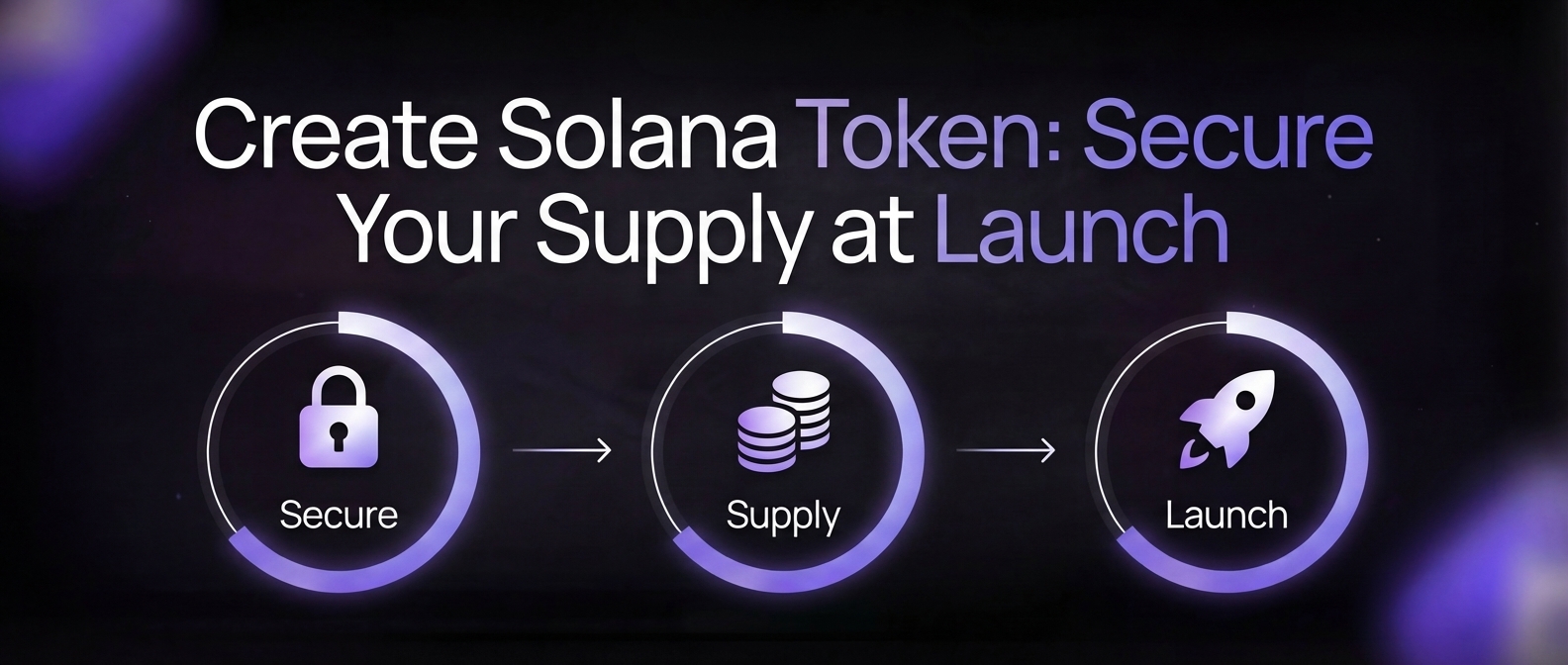
Create Solana Token: Secure Your Supply at Launch
The Brutal Reality of Launching a Token on Solana
If you plan to create a Solana token in 2026, you are entering one of the most hyper-competitive environments in decentralized finance. The barriers to entry for deploying a smart contract have vanished, leading to an explosion of memecoins, utility tokens, and community projects. However, this accessibility has introduced a severe threat: predatory infrastructure.
When a standard developer attempts to launch a token using consumer-grade interfaces or public RPC nodes, they face the immediate danger of launch sniping. Sniper bots constantly scan the Solana mempool for new initializeMint instructions. Because these bots utilize programmatic infrastructure and massive priority fees, they can detect your token creation, construct a buy order, and execute it before your own manual purchase has even registered on the network.
If you do not secure your supply in the exact same fraction of a second that your token goes live, you will be forced to buy your own supply at a massive premium, effectively ruining your tokenomics from block zero. To survive, you must abandon manual clicks and adopt an atomic execution strategy.
The Danger of Getting Sniped at Launch
To fully understand why you need programmatic infrastructure to create a Solana token, you must understand the mechanics of a sniper attack.
When you deploy a token via a standard web interface, the deployment and your initial "dev buy" are processed as two entirely separate transactions. This creates a highly vulnerable temporal gap:
- Transaction 1 (Deployment): Your token smart contract is minted and liquidity is initialized.
- The Temporal Gap: The token is now live on the blockchain. Sniper bots detect the liquidity pool creation instantly via gRPC streaming. They automatically broadcast massive buy orders using ultra-high validator tips.
- Transaction 2 (Your Dev Buy): Your web browser finally submits your buy order. Because you are using a shared public RPC, your transaction is delayed by 300 to 500 milliseconds.
- The Result: The sniper bots acquire the bottom of the bonding curve. Your delayed transaction processes after the price has already skyrocketed, leaving you with a fraction of your intended supply and putting the sniper in control of your market.
The Solution: Simultaneous "Create + Dev Buy" Transactions
The only way to completely neutralize launch snipers is to eliminate the temporal gap entirely. By upgrading to an API-first stack, you can create a Solana token and execute your developer buy order within the exact same payload.
In this atomic architecture, your smart contract deployment and your supply acquisition share the exact same cryptographic signature and land in the exact same Solana slot (Block 0). Because the actions are structurally bound together, it is mathematically impossible for a third-party bot to insert a transaction between your creation and your purchase. You secure the absolute floor price of your bonding curve effortlessly.
To visualize this operational advantage, consider the architecture of an atomic block-zero launch:
Step 1: Establishing Your Developer Infrastructure
Before you deploy your contract, you must prepare the wallets that will hold your developer supply. Using a programmatic infrastructure platform simplifies this entirely. Instead of generating browser extension wallets one by one, you can spin up a decentralized fleet instantly.
You can read the Create Wallets documentation to understand how to generate your secure operational keypairs server-side.
Once generated, you must inject SOL into your main deployment wallet. To prevent blockchain surveillance algorithms from linking your operations, be sure to review the Transfer Methods documentation and utilize privacy-focused routing. If you need a comprehensive overview of how to distribute your funds cleanly, check out our guide on how to Automate Solana Wallet Creation & Funding.
Step 2: How to Create a Solana Token with Dev Buy
With your infrastructure primed, you are ready to create a Solana token without exposing your liquidity to external snipers. The Launchpad API allows you to encapsulate your token metadata, social links, and your critical devBuy amount in one simple JSON payload.
By setting the devBuy parameter, the backend engine inherently knows to bundle the purchase instruction immediately after the mint initialization.
If you want to maximize the visibility and success of your project directly at launch, you can additionally trigger native algorithmic marketing features. Dive into our article on Pump Fun Mayhem Mode & Cashback API Features Explained to learn how appending a simple true/false flag can auto-generate massive organic volume for your new token.
For a full parameter breakdown, verify the Create Token on PumpFun documentation.
In the payload above, we pass the ULTRA priority fee constraint. Because network congestion fluctuates severely, a standard fee might cause your creation transaction to stall. Accessing premium validator lanes ensures your token launches exactly when you execute the script. Read our breakdown on Solana Priority Fees Explained: FAST vs ULTRA Execution and review the Priority Fee documentation to master this dynamic scaling.
Step 3: Advanced Supply Control with Multi-Wallet Bundles
While a single developer buy secures your initial position, massive project launches often require distributing the supply across an entire operational fleet to maintain decentralized optics and mitigate risk.
When you create a Solana token using advanced Jito bundles, you can programmatically command up to 14 distinct wallets to acquire supply simultaneously within the exact same block. This eliminates the risk of snipers stepping between your primary and secondary developer wallets. To explore this hyper-secure architecture, study the Bundle Launch documentation.
To ensure you fully grasp the potential of these backend execution capabilities, you should reference the Ultimate Pump.fun API guide, which serves as a masterclass for transitioning from retail tools to institutional programmatic setups.
Infrastructure Comparison: Why APIs Win
Attempting to launch a competitive asset without dedicated infrastructure is an exercise in futility. Standard consumer web platforms rely on bloated public nodes, leading to disastrous execution latency.
Conclusion
If you want to create a Solana token and ensure long-term viability, treating the deployment phase as a technical priority is mandatory. By moving away from slow, manual consumer interfaces and embracing a high-speed execution API, you effortlessly bypass the threats of mempool snipers and block-zero front-running. Automating your smart contract deployment and your developer supply acquisition natively ensures your market launches precisely on your terms.
Frequently Asked Questions
- What happens if I create a Solana token without a simultaneous dev buy?
Sniper bots actively monitor the blockchain for new contract deployments. If you do not bundle your buy order atomically with the creation event, these bots will purchase the earliest supply at the lowest price, forcing you to buy back your own token at a severe premium. - Are my private keys stored when I deploy a token via the API?
No. The programmatic infrastructure is completely non-custodial. Your private keys are processed ephemerally in volatile memory solely to sign your deployment and buy transactions, and they are immediately discarded without ever being written to disk. - Can I distribute my initial dev supply across multiple wallets instantly?
Yes. Utilizing advanced bundle launch strategies allows you to deploy the token and execute coordinated buy orders from up to 14 distinct wallets simultaneously within the exact same block.
Get your API key and launch your secure token today
Discover also

7 Apr
Privacy Protocols and Wallet Isolation on Solana
Learn how to protect your Solana trading strategies with transaction isolation, compartmentalized transfers, and professional fund routing to prevent clustering.
Moodan
GTM
.jpg)
6 Apr
Manual Trading vs. API Trading on Solana: Finding Your True Edge.
Discover how a Solana trading API beats manual clicking. Compare 25ms execution speeds, multi-wallet automation, and Jito bundles in volatile markets.
Moodan
GTM
2 Apr
How to Code a Solana Copy Trading Bot: Developer Guide
Learn how to build a high-speed Solana copy trading bot. Track whale wallets and execute copy trades instantly using Launchpad's programmatic API.
Moodan
GTM